Most book ads fail before anyone reads a single word. The visual is wrong, the hook is generic, and the format was borrowed from a course seller — not a book marketer. What actually converts readers into buyers comes down to one thing: matching the right template format to the right emotional trigger for your specific audience.
This guide breaks down 15 proven static ad formats, explains exactly why each one works, and shows you how AuthorWizard's Static Ad Generation feature lets you produce all 15 — using your own book cover — in a single session, without a designer, copywriter, or ad agency.
---Why Most Authors Waste Money on Book Ads
Here's the painful pattern: an author spends six months writing a book, pays $400–$2,000 for a cover, then throws together a Canva ad with the cover image and a line like "Available Now on Amazon." It gets 11 impressions and four clicks. One of those clicks is them checking if it worked.
The problem isn't the budget. It's the format. Static ads that convert don't look like book covers — they look like content native to the platform they live on. A high-converting Instagram ad looks like a meme, a warning label, or a friend's hot take screenshot. A high-converting LinkedIn ad reads like a stat that stops your thumb mid-scroll. Different platforms. Different triggers. Different templates.
Hiring an ad creative agency to build these runs $1,500 per month on retainer. A single freelance designer charges $75–$200 per concept. Most authors skip it entirely and wonder why their launch flopped.
The 15 Static Ad Templates That Actually Convert
AuthorWizard includes 15 individually designed static ad templates, each built around a distinct psychological trigger. Here's what they are, why they work, and when to use each one.
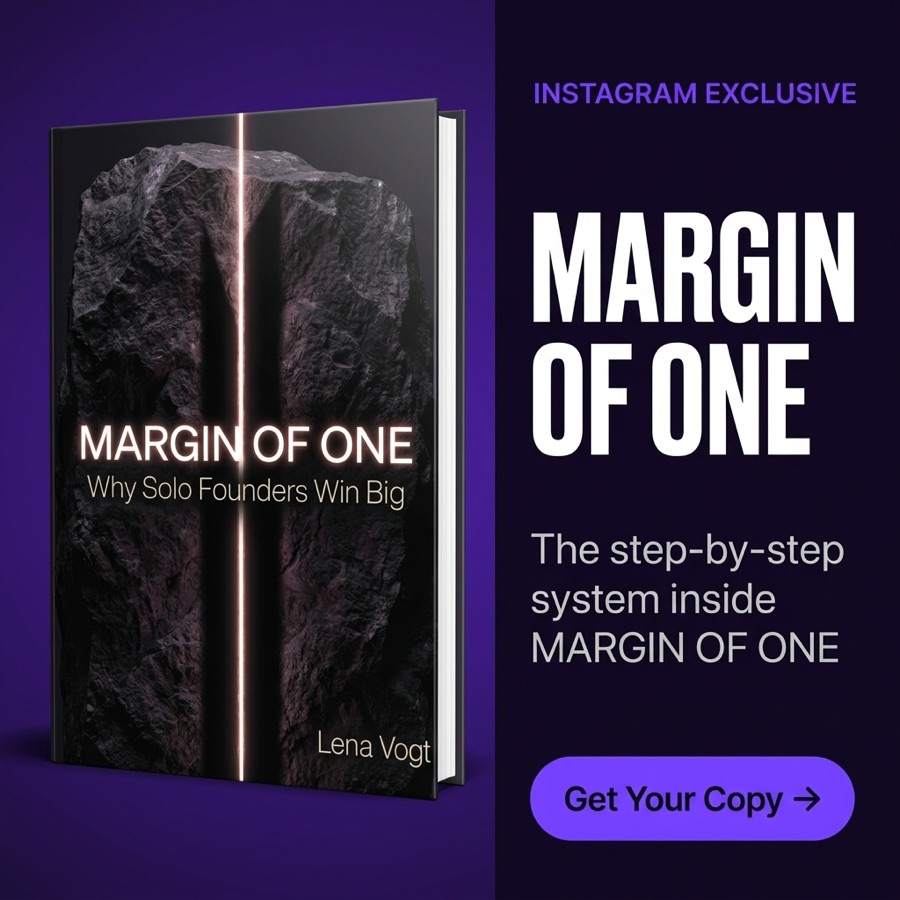
The 15 Proven Book Ad Template Formats
- Classic Split — Book cover on one side, headline and CTA on the other. Clean, direct, works for professional and business audiences. Best on LinkedIn.
- Billboard Takeover — Full-bleed bold typography dominates the frame. The book cover is secondary. Stops the scroll with attitude. Best for Instagram and Facebook.
- WARNING Label — Styled like an FDA warning sticker. Works on humor, irony, and pattern interruption. Outperforms standard formats for self-help and business books.
- Movie Poster — Cinematic composition, dramatic tagline, your book treated like a blockbuster. High-status signal. Works for narrative non-fiction and memoir.
- Torn Reveal — Paper-tear effect revealing a contrast between before and after. Triggers curiosity. Strong for transformation-focused books.
- Text Thread Reveal — Designed to look like a real iMessage or DM conversation about the book. Native-looking, high-trust, shareable. Dominates on Instagram Stories.
- Stat Scoreboard — A single bold statistic framed like a sports scoreboard. Credibility-first. Crushes on LinkedIn for research-backed books.
- Book Math — Simple visual equation: Problem + This Book = Result. Concrete, logical, and fast to parse. Effective for how-to and business books.
- Us vs. Them Grid — Side-by-side comparison grid. Your reader's new identity vs. their old one (or vs. everyone who hasn't read it yet). Tribal. Converts well on Facebook.
- Confession — First-person admit-something opener. "I wasted 4 years before I learned this." Creates instant identification with the reader's real experience.
- Excuse Graveyard — A tombstone-styled list of the excuses your reader will never use again after reading. Dark humor meets emotional permission. Viral on TikTok.
- Boss Fight — Frames the reader's core problem as a boss-level enemy they're about to defeat with the book as their weapon. Gaming-native. Younger audiences.
- Book Kaiju — Giant book towering over a city skyline or real-world setting. Absurdist scale creates shareability and brand recall.
- Group Chat Roast — Styled like a group chat where the book is being hyped between friends. Social proof wrapped in native-looking casual content.
- The Receipt — Designed like a printed receipt itemizing everything the reader "gets" from the book, with a total at the bottom. Concrete value visualization. Strong for business/productivity books.
How to Choose the Right Template for Your Book
Template choice is audience + platform + emotional hook. Here's a fast decision framework.
If your reader is a professional on LinkedIn: Stat Scoreboard, Classic Split, and Book Math outperform everything else. They reward logic over emotion and match LinkedIn's feed culture.
If your reader is scrolling Instagram Reels or TikTok: WARNING Label, Group Chat Roast, Excuse Graveyard, and Torn Reveal stop the thumb. Pattern interruption beats polish on short-form platforms every time.
If your book is a personal transformation story: Confession, Torn Reveal, and Movie Poster connect emotionally. The reader sees themselves in the before-state and projects themselves into the after.
If you want virality over clicks: Book Kaiju, Excuse Graveyard, and Boss Fight are built for sharing, not just clicking. Reach first, conversion second — and that's fine if your funnel handles the rest.
The honest answer? Test at least 3–4 formats per platform. What works for a business strategy book targeting CFOs on LinkedIn will bomb for a mindset book targeting 28-year-old women on Instagram. The data tells you faster than any guru.

The Old Way: Slow, Expensive, and Still Wrong Half the Time
The traditional process for building static book ads looks like this: you hire a freelance designer on Fiverr or 99designs. You write a brief. They misunderstand it. You go back and forth 4–6 times over 10 days. The final file is 72 DPI and the font is wrong. You pay $150–$300 per concept, launch three versions, none of them convert above 0.8%, and you blame Facebook's algorithm.
Or you pay a marketing agency $1,500/month. They build 8 concepts in week one, call it a "full creative suite," and you never hear a strategic rationale for why they chose any particular format.
Neither approach gives you what you actually need: a system that generates platform-native formats fast, uses your real book cover automatically, and is grounded in what competitor ads in your space are already proving works.

How AuthorWizard Generates 15 Book Ad Templates That Convert
AuthorWizard's Static Ad Generation feature does something most authors don't expect: it doesn't just drop your cover into a template. It thinks about your book first.
You get two paths.
Path 1 — Batch Mode: Generate 10 AI-written ad concepts in one pass. Each concept includes a headline, visual direction, platform recommendation, and body copy — written around your specific book using your cover as the image. Across Instagram, Facebook, LinkedIn, and TikTok simultaneously. One click. Thirty seconds.
Path 2 — Template Mode: Pick from all 15 individually designed formats above and generate them one at a time. You're not filling in a blank Canva slide — the template structure, visual logic, and copy framework are already built for that specific psychological trigger. You're just pointing the AI at your book.
There's a third path that most authors sleep on: competitor ad cloning. Found a static ad in your category that's been running for months? Long-running ads mean they're converting — platforms pull underperforming ads fast. Inside AuthorWizard, you can search a real ad-intelligence database by keyword, author name, or brand. Pick any ad you find. The AI visually analyzes the actual image — not just its text — and recreates that exact ad's structure, setting, and format with your own book cover swapped in. You get the proven concept. You replace the book.
What This Replaces (and What It Costs Without AuthorWizard)
Let's be direct about the math. Running a real book ad campaign with professional creative support normally looks like this:
- Ad research and competitive analysis: $1,500/month from an agency
- Static ad creative (design + copy per batch): $300–$800
- Revisions and iterations: $75–$200 per round
- Book marketing strategist to advise on format and platform: $2,500
That's $4,300–$5,300 to launch with one decent creative suite — before you spend a dollar on actual media.
AuthorWizard's marketing tools, including the Static Ad Generation, Competitor Ad Research, AI Influencer Videos, 3D Book Renderings, and Author Photo Studio, are all included in the platform. The 3D mockups alone normally cost $300–$800. Professional author photos run $200–$800 for a session. Influencer posts start at $500 each and climb past $5,000 for anyone with a real audience.
Authors using AuthorWizard skip all of that. Static ads, influencer-style video content, photorealistic 3D mockups ready for landing pages and Amazon — generated in one session, not one quarter.

One More Thing: You Don't Need a Designer
The barrier most authors hit isn't strategy — it's production. They know the WARNING Label format would crush on Instagram. They just can't build it. Canva gets them 60% of the way there and then the file exports at the wrong resolution and the font pairing looks like a high school flyer.
AuthorWizard handles the production layer entirely. Your book cover feeds directly into every template. The copy is AI-generated from your actual book positioning — not lorem ipsum you replace manually. The output is ready for the platform you picked, sized correctly, built around a proven format, and done in the same session where you decided to run ads.
You go from "I should probably run some ads" to a set of 10–15 tested creative concepts in under an hour. That's the actual difference between authors who launch with momentum and authors who launch with hope.
Get Your Complete Author Marketing Suite
AI Influencer Videos, 3D Mockups, Author Photos, Intel Feed — everything you need to launch and sell your book, without paying a marketing agency.
Explore AuthorWizard Free →