A winning static ad is a rare thing. It converts, it scales, and it feels like you finally cracked the code. Then engagement starts to dip — and you're terrified to touch it. Here's the truth: you don't have to blow it up to bring it back. Refreshing a winning static book ad is a surgical process, not a rebuild, and when you do it right, you protect the core mechanics that made it work while giving the algorithm and your audience something new to respond to.
Why Winning Ads Fatigue (And Why That's Not Your Ad's Fault)
Ad fatigue is a frequency problem, not a quality problem. When the same 1,200 people in your target audience have seen your ad 11 times in 3 weeks, their brains start filtering it out automatically. Click-through rate drops. Cost-per-click climbs. It looks like the ad stopped working — but really, the audience stopped seeing it.
The mistake most authors make is scrapping the whole thing. They rewrite the headline, swap the visual, change the offer, and kill every variable that was actually driving results. Then they wonder why the new version underperforms.
The smarter move: identify which elements are doing the heavy lifting, change only what creates novelty, and leave the rest alone.
Step 1 — Autopsy the Ad Before You Touch Anything
Before you change a single pixel, write down exactly what's working. Pull the numbers. Look at:
- Hook rate — are people stopping to read it? (High impressions, decent CTR = strong visual or headline)
- Click-through rate — are they curious enough to act? (Strong CTR + weak sales = landing page issue, not the ad)
- Comment sentiment — what are people actually saying? ("I need this" vs. "how much is it?" tells you different things)
- Which platform it ran on — an Instagram winner often dies on Facebook because the audience skews older and scrolls slower
Write one sentence that answers this question: What is the single thing this ad does that makes someone stop scrolling? That sentence is now protected. Everything you change in the refresh has to preserve that mechanism.
Step 2 — Isolate the Refresh Variables
A static book ad has about 5 movable parts: the headline, the visual (usually your cover or a styled image of it), the body copy, the call-to-action text, and the platform/format ratio. The goal is to change 1–2 of these at a time, never all 5 at once.
Here's how to think about each one:
- Headline first — This is the safest place to start. The same visual with a new angle can feel like a completely fresh ad. If the original headline was a stat ("83% of executives wish they'd read this book sooner"), try a confession angle next ("I almost didn't write this chapter").
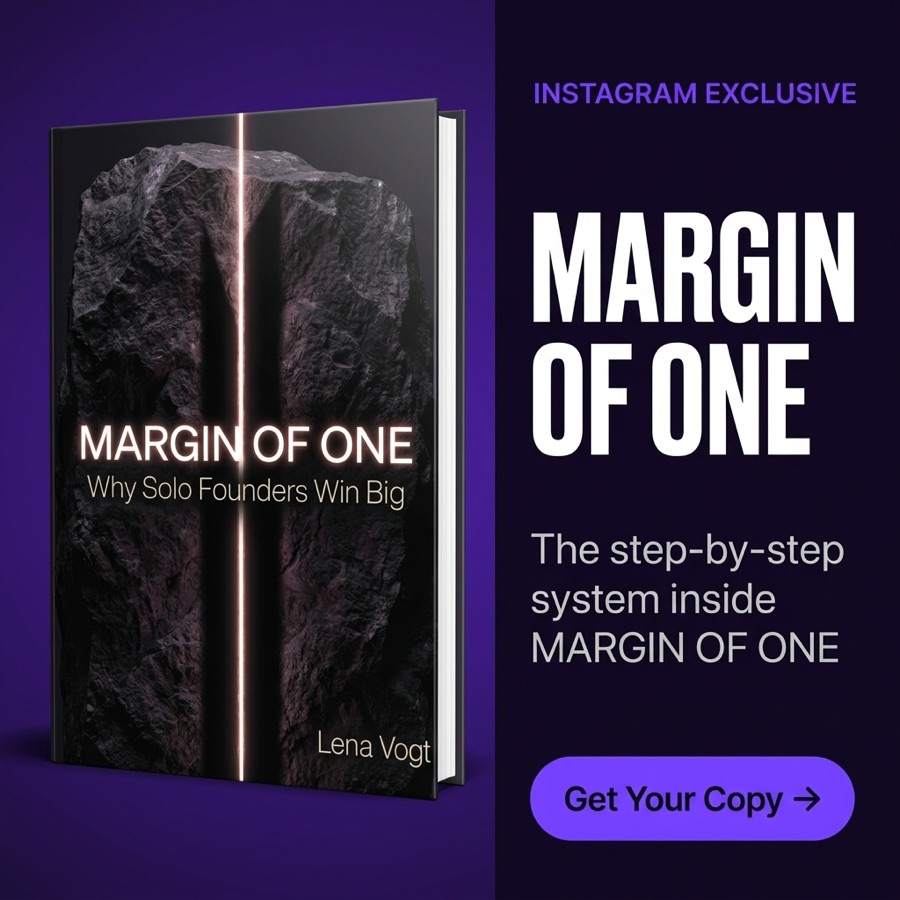
- Visual second — Swap the template style, not the cover. If you ran a Classic Split layout, try a Billboard Takeover or a Stat Scoreboard version of the same core message. The cover stays. The frame around it changes.
- Body copy third — Only touch this if CTR is strong but conversions are weak. That's the signal the hook works but the follow-through doesn't.
- CTA text last — "Get the Book" vs. "Start Reading Free" vs. "Grab Your Copy" can move numbers, but test this after you've stabilized everything else.
Never change the platform targeting, the visual, and the headline at the same time. If the refreshed version wins, you won't know which change caused it.
Step 3 — Study What's Actually Winning Right Now
Your ad didn't win in a vacuum. It won because it matched a pattern your audience was already primed to respond to. Before you write a single new headline, look at what's currently running in your genre and niche.
The most reliable signal for a working ad is longevity. An ad that's been running for 6 weeks hasn't survived because someone forgot to turn it off — it's survived because it's profitable. Underperforming ads get pulled in days. Find the ads that are still alive and study their structure.
Look specifically at: the hook format (question? stat? bold claim?), the visual style (clean and minimal? chaotic and urgent?), and the CTA pattern (soft ask or direct?). You're not copying — you're extracting the architecture and rebuilding it around your book.

How AuthorWizard's Static Ad Studio Handles This

How to Refresh a Winning Static Book Ad in AuthorWizard (Step-by-Step)
- Run a batch of 10 new ad concepts in one pass. AuthorWizard's Static Ad Studio generates 10 AI-written ad concepts — headline, visual direction, platform, body copy — using your actual book cover as the image. Each concept targets a different angle (pain point, transformation, social proof, curiosity gap). One pass gives you 10 real candidates to test against your control.
- Browse the 15 named templates and pick a new frame. If your original winner was a Classic Split, pull up Billboard Takeover, WARNING Label, or The Receipt and generate a new version. Same cover, completely different visual architecture. The templates are individually designed — not variations of one layout — so the visual shift is significant enough to reset fatigue without breaking brand recognition.
- Use Competitor Ad Research to find the current pattern. Search a live ad-intelligence database by keyword, author name, or genre. Filter by longest-running to find ads that are actually converting right now. Pick one and AuthorWizard's AI visually analyzes the actual image — not just its text — to generate a prompt that recreates that ad's setting and structure with your book and cover swapped in.
- Use the Inspiration Basket to extract copy patterns. Save 3–5 strong competitor ads and AI pulls out the shared hook structure, pain-point language, proof format, and CTA style across all of them, then writes new scripts in those same patterns — specifically for your book.
- Generate the refreshed version and A/B test it against your control. Run both simultaneously at equal budget for 5–7 days before making any decisions.
The critical thing AuthorWizard does that most tools don't: it analyzes the actual visual of competitor ads, not just the copy. A winning ad's power is often 70% in its visual composition — the colors, the negative space, the way the book cover is positioned — and you can't reverse-engineer that from a text analysis alone.
Step 4 — Run the Refresh as a True A/B Test, Not a Replacement
This is the most skipped step, and it's why most refreshes fail. Authors kill the winning ad, replace it with the refresh, and then wonder why results are down. Never kill the control first.
Keep your original ad running. Launch the refresh as a separate ad set at equal budget — typically $10–$20/day each is enough to generate meaningful data within a week. Give it 5–7 days minimum. Early performance in the first 48 hours is almost meaningless because the algorithm is still in the learning phase.
If the refresh outperforms the control after 7 days, scale the refresh and pause the original. If it doesn't, you've lost nothing — the original kept running the whole time, and you have real data about what didn't move the needle.

Step 5 — Document What You Changed and Why It Worked
Most authors treat each ad as a one-off. The ones who build durable advertising engines treat each test as a data point in a system. After every refresh cycle, write down:
- What the original headline was and what you changed it to
- Which template or visual style you tested
- Which platform the test ran on
- The CTR and conversion rate of both versions
- The specific element you believe drove the difference
After 4–5 refresh cycles, patterns emerge. You'll know that your audience responds to stat-based headlines over question-based ones, or that the Movie Poster template consistently outperforms the Billboard Takeover for your genre. That's not guesswork anymore — that's a repeatable playbook.
The goal isn't to write one great ad. It's to build a library of proven elements you can recombine quickly every time fatigue sets in — and fatigue always sets in. A strong ad in a narrow niche typically needs a refresh every 3–6 weeks. Having a system ready means you're refreshing in an afternoon, not starting from scratch.
10 Ad Concepts, or 15 Proven Templates — Your Choice
Generate a batch of 10 AI-written ad concepts from your cover, or pick from 15 individually designed templates (Movie Poster, Billboard Takeover, The Receipt, and more) and generate one at a time.
Try the Ad Studio Free →