Amazon's "Ask This Book" feature lets Kindle readers type a question and get an AI-generated answer pulled directly from the book's content. If you're a non-fiction author, that's a significant shift in how your work gets consumed — and monetized. The good news: you don't have to sit helplessly on the sidelines. The bad news: your control is more limited than most authors realize. Here's exactly how it works in 2026, what you can influence, and what you simply cannot change.
What Is Kindle Ask This Book — and How Does It Actually Work?
Kindle Ask This Book is an AI feature Amazon launched in December 2025 for thousands of English-language titles in the US, first in the Kindle iOS app, with other devices to follow. A reader opens a book, types a question in plain English, and Amazon's AI answers from the book's text. For readers, it's genuinely useful: they get the specific insight without scrolling through 240 pages.
For readers, it's genuinely useful. They get faster access to the specific insight they need without scrolling through 240 pages. For authors, it's a mixed picture. Your words are being surfaced, attributed, and used to answer questions in real time. That's visibility. But the framing, the emphasis, and the selection of which passage "answers" a question? That's Amazon's algorithm, not yours.
Here is the catch: Amazon told Publishers Lunch the feature is always on and that authors and publishers cannot take titles out of it. The Authors Guild has objected, saying it was added without permission and may infringe authors' and publishers' rights. We found no report of an opt-out being added, so check KDP Help for the current status.
What Authors Can Control
Here's where authors actually have leverage. These are the real dials you can turn.
- Your writing, not a switch: There is no opt-in or opt-out you can use, so the part you control is the book itself: how clearly it is written and structured.
- The quality and clarity of your writing: Ask This Book AI works from your actual text. Vague, meandering chapters produce vague, meandering answers. Crisp, structured prose with clear conclusions produces sharper, more quotable responses. This is the single biggest lever you have.
- How you structure your chapters: Books organized around specific, answerable questions — with clear headings and direct thesis statements near the top of each section — feed the AI better source material. Think of it as writing for two audiences simultaneously: human readers and AI retrieval systems.
- The specificity of your examples: AI retrieval tends to favor concrete, well-bounded passages. A paragraph that says "Studies show this approach increases productivity by 37% over six weeks" is far more retrievable — and more compelling when surfaced — than "many experts agree this helps."
- Your metadata: Your book's title, subtitle, keywords, and categories all inform how Amazon classifies your content. A well-targeted keyword strategy means the book is more likely to appear in the right Kindle context, which increases the chance Ask This Book is activated by readers who actually want what you wrote.
What Authors Cannot Control
This is where it's important to be honest about the limits — because overestimating your control leads to wasted effort.
- Which passages get selected: Amazon's AI decides which section of your book best "answers" a given question. You cannot tag, weight, or flag specific paragraphs for priority retrieval. If you wrote a nuanced argument across three chapters and the AI surfaces only one sentence from chapter two, that's the answer the reader sees.
- How your answer is phrased: The AI may synthesize or paraphrase your text rather than quoting it verbatim. Your exact voice, your specific framing, your carefully chosen analogy — these may or may not survive the retrieval process intact.
- Competitor comparisons: Nothing stops a reader from asking "How does this compare to [another book]?" and the AI drawing on both. You don't control the cross-book context Amazon's system operates in.
- Which questions trigger your book: You cannot submit a list of questions you want your book to "answer." The feature responds to what readers actually type, which is unpredictable.
- Royalty treatment of AI-surfaced content: We found no report of a separate royalty for Ask This Book. Check KDP Help for any change.

Kindle Ask This Book: Author Control Quick Reference (2026)
You CAN control:
- Writing clarity and chapter structure (directly affects retrieval quality)
- Specificity and concreteness of your examples
- Book metadata: title, subtitle, keywords, browse categories
You CANNOT control:
- Which specific passages Amazon's AI selects
- Whether your exact phrasing is preserved or paraphrased
- What questions readers ask
- Cross-book AI comparisons
- Whether your title is included at all, or royalties tied to query volume
The Practical Implication: Your Marketing Has to Work Harder
Here's what Ask This Book actually changes for non-fiction authors: the discovery funnel is getting shorter. A reader can extract your core insight without finishing the book. That's a real challenge. The response isn't to panic. It's to make your marketing so compelling that readers want the full experience, not just a paragraph.
That means author videos that show your face and story. It means influencer-style content that positions the book as an experience worth owning. It means static ads that make a reader feel something, not just scan a summary. The books winning in this environment aren't hiding behind their prose. They're out in front of it.
The authors losing are the ones who wrote a good book and assumed discovery would take care of itself. In 2026, it won't.
How AuthorWizard Handles the Marketing Side
AuthorWizard's marketing suite exists specifically for this problem. When readers can get a surface-level answer from an AI feature, your job is to make them want the full book — and that requires real marketing assets, not a vague social media presence.
Here's what the platform actually builds for you:
- AI Influencer Videos (Stage 9): The system identifies 4 distinct reader segments your book would attract, then builds a full AI influencer persona per segment — complete with name, platform (TikTok, Instagram, YouTube, LinkedIn), visual bio, and a photoreal preview image. It also gives you a bench of 19 always-ready preset influencer characters you can use instantly. Each persona's script is tied permanently to that persona, so swapping faces never mismatches a script. These are social-ready for Instagram Reels, TikTok, and YouTube Shorts — the kind of top-of-funnel content that makes a reader want to buy, not just query an AI.
- AI Author Videos (Stage 10): One selfie becomes up to 5 separate ~15-second video clips of you on camera, holding your real book cover. Every script follows a 5-beat direct-response arc — Hook, Problem, Transformation, Proof, CTA — grounded in a real competitor ad you pick first. No camera, no editing software, no crew.
- Competitor Ad Research + AI Ad Cloning (Stage 11): Search a live ad-intelligence database by keyword, brand, or author name. Filter by longest-running ads — a real proxy for what's actually working, since underperforming ads get pulled fast. Pick any ad, and the AI visually analyzes its actual image or video to generate a prompt that recreates its setting and structure with your book and avatar swapped in. Separately, save several ads' copy into an Inspiration Basket and the AI extracts the hook patterns, pain-point language, and CTA style they share — then writes new scripts in those same patterns for your own videos and ads.
- Static Ad Generation (Stage 13): Generate 10 AI-written ad concepts across Instagram, Facebook, LinkedIn, and TikTok in one pass, using your actual book cover as the image. Or pick from 15 individually designed templates — from "WARNING Label" to "Book Math" to "Confession" — and generate one at a time.
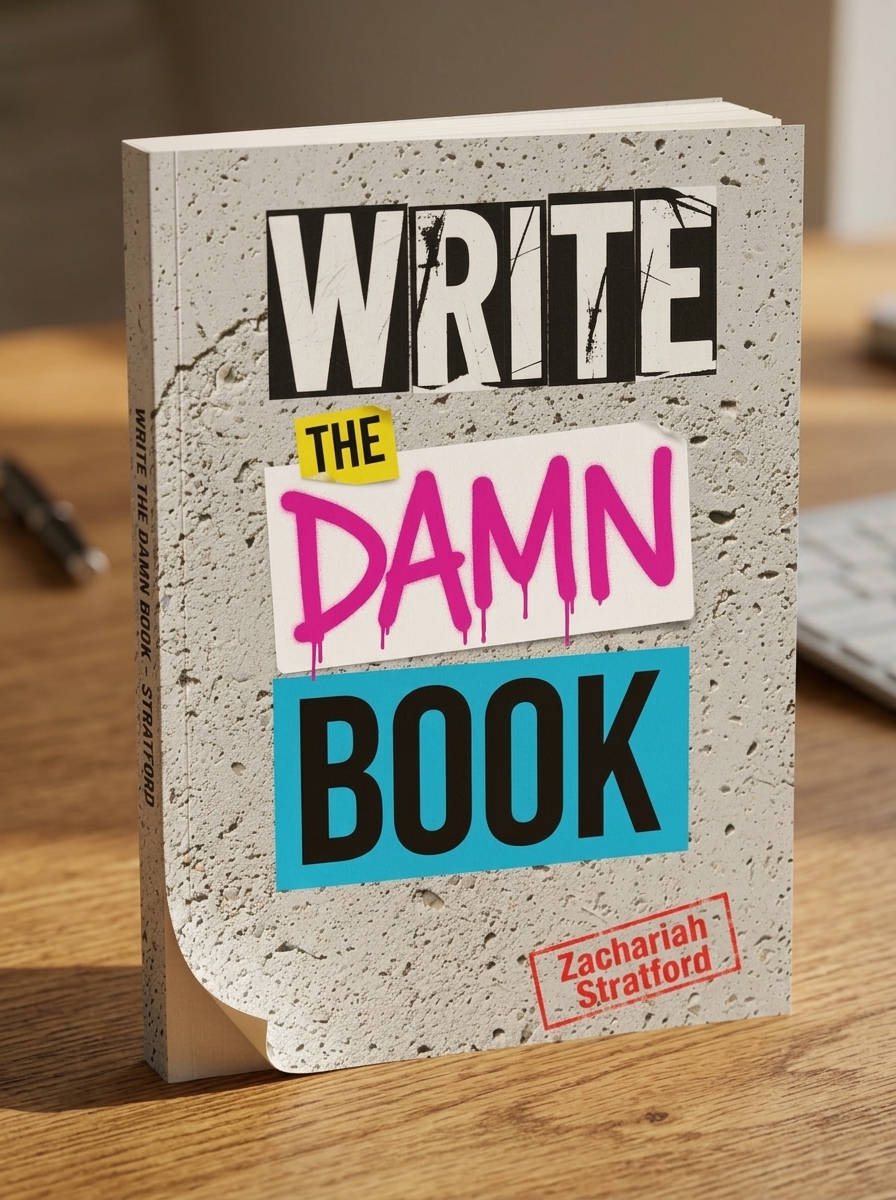
- 3D Book Rendering Studio (Stage 8): Five photorealistic 3D renderings — hardcover, paperback, e-reader/Kindle device mockup, standard boxset, and course package boxset — ready for ads, landing pages, and social media. These are the visuals that make a book look real and worth buying at a glance.
- Market Intelligence Report (Stage 2): Built on 24 months of real NYT Bestseller List data, the report gives you 7 real KDP search keywords, Amazon browse-category picks, a marketing hook pattern with an example headline, and specific reader communities to target at launch — all grounded in your actual book concept and 3 real comp titles.
None of these replace strong prose. But all of them do something Ask This Book cannot: they make a reader feel connected to you as an author before they've read a single page.
The Bottom Line for Authors in 2026
Kindle Ask This Book is not something to fear or fight. It's a feature that rewards authors who write clearly, structure their chapters deliberately, and market beyond the page. The authors it disadvantages most are the ones who assumed the writing alone would do the selling. It never did — and in 2026, that's even more true than before.
Control what you can: your writing quality, your structure and your metadata. Then invest equally hard in the marketing layer that Ask This Book cannot replace: the visual presence, the video content, the ad creative, and the reader communities that decide a book is worth owning outright.
Get Your Complete Author Marketing Suite
AI Influencer Videos, 3D Mockups, Author Photos, Intel Feed — everything you need to launch and sell your book, without paying a marketing agency.
Explore AuthorWizard Free →